
City provides information to help residents prepare for winter
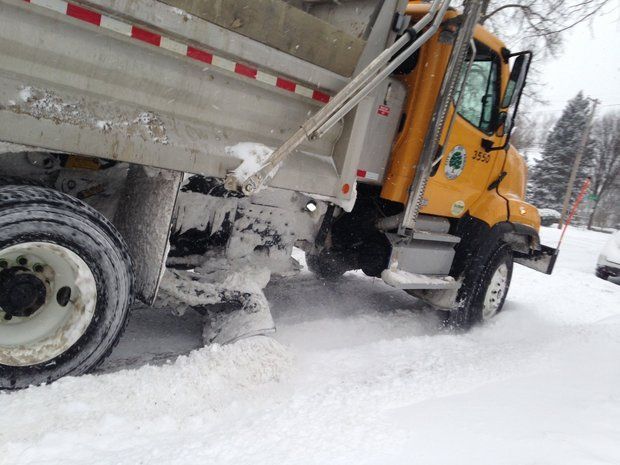
Winter weather in Ann Arbor typically brings ice and snow along with the cold temperatures. The City of Ann Arbor is sharing information on the city’s winter services and operations and ways residents, businesses and visitors can also prepare for the seasonal changes ahead.
Snow plowing: What to expect
Ann Arbor crews prioritize major streets, followed by residential streets as conditions allow. Anyone can track city snowplows in real time, see which streets have been plowed and learn about snow removal procedures at www.a2gov.org/snow.
- Timing: The city’s goal is to treat or plow all streets within 24 hours following a typical snowstorm of 4 to 6 inches. Large storms may require additional time to complete plowing in all residential neighborhoods. Road conditions: Winter maintenance aims to support safe travel at reasonable speeds while limiting the environmental effects of salt use. Drivers should adjust their speed to conditions.
- Snow left by plows: Plowing can deposit snow on sidewalks and driveway entrances. When possible, clear these areas after plows pass, while meeting sidewalk snow removal deadlines (see below).
- Mailboxes: Residents are responsible for clearing snow and ice around mailboxes, including snow deposited by plows.
- Other properties: City crews do not maintain schools or privately owned roads and parking lots.
On-street snow parking bans: Plan ahead
The city may declare an on-street snow parking ban to help crews clear streets and maintain access for emergency vehicles. Following is a summary of what to expect:
- When a ban may be called: An on-street parking ban for snow removal may be called whenever weather conditions make it necessary to restrict parking to allow removal of existing or forecasted snow. Storm severity, duration and holidays can factor into the decision.
- Notice and duration: Bans will be announced at least 12 hours before taking effect and remain in effect until lifted.
- Exemptions: Vehicles with disability plates or placards are exempt. Certain streets or blocks may also be exempt because of limited off-street parking.
- Enforcement: The city requests voluntary compliance, however, vehicles violating a ban may be ticketed or towed.
Visit www.a2gov.org/snowparking for full details, including street exemptions and alternative parking options, to find tips for planning where to relocate your vehicle before a snowstorm and to sign up for snow parking ban notifications and other emergency alerts.
Sidewalks, crosswalk ramps and bus stops: Know your responsibilities
Keeping sidewalks, crosswalk ramps and bus stops clear and treating them for improved traction helps people of all ages and abilities travel during winter.
Ann Arbor’s snow and ice removal requirements differ by property type:
- Residential properties: Owners or occupants must clear snow accumulations greater than 1 inch from adjacent sidewalks, crosswalk ramps and concrete bus stop pads within 24 hours after snowfall ends. Enforcement will not begin until after a winter storm.
- Nonresidential properties: Owners or occupants must remove snow and ice that accumulated before 6 a.m. by noon that day. This includes adjacent sidewalks, walks and ramps at bus stops and crosswalk ramps. Ice that cannot be removed must be treated to prevent slippery conditions until it can be removed.
Do not move snow or ice from private property onto public streets, sidewalks or bridges. Doing so creates hazards and violates city ordinance.
If you are able:
- Check on neighbors who may need help clearing snow.
- Assist first responders by shoveling around neighborhood fire hydrants.
Find snow/ice management requirements and treatment information at www.a2gov.org/sidewalksnow.
A2 Snow Match: Volunteer or request help with sidewalks
The A2 Snow Match program pairs residents who need help clearing sidewalks with nearby volunteers.
To qualify for assistance, residents must:
- Be 55 or older or self-identify as having a disability.
- Lack the financial resources to hire a service and have no nearby family, friends, neighbors or others available to help.
The program aims to match volunteers with homes within a half mile, or about a 10-minute walk, of their location.
Register to volunteer or request snow clearing assistance.
Trash, recycling and compost: Keep carts accessible
Help collection crews reach carts safely:
- For curbside cart collections:
- Clear a level space. Place carts on a cleared, level section of the road or lawn extension, never on a snowbank.
- Leave room. Keep 3 feet of clearance around each cart.
- Consider plowing. If possible, wait until your street has been plowed before setting carts out, while meeting set-out deadlines.
- Ensure parking lots, driveways and walkways around carts and dumpsters are cleared of snow and ice and treated for safe accessibility of service personnel and vehicles.
Improperly placed carts can interfere with plowing, delay collection or prevent pickup.
Monthly winter compost collection begins in January 2027. Collection dates and instructions can be found at www.a2gov.org/wintercompost.
Free residential sand/salt
During the winter, the city provides residents with up to 5 gallons of a sand/salt mixture, per visit, at locations around Ann Arbor. Residents need to bring their own shovel and bucket as well as load material themselves from the marked boxes. Sand/salt mixture is not for contractors or landscapers. Locations are filled as quickly as possible, however there may be delays due to winter weather staffing needs.
Locations for pick up follow; also see location information and maps at https://url.a2gov.org/saltsites.
- Veterans Memorial Park
- Gallup Park
- Buhr Park
- Burns Park
- Leslie Park
Keeping walkways safe, responsibly
De-icing products can help keep sidewalks and walkways safe, but each has benefits and drawbacks. Rock salt is generally inexpensive but becomes less effective below 15 degrees Fahrenheit and can harm waterways, including the Huron River. Alternatives may work at lower temperatures, but they can also damage surfaces, harm plants and animals or affect water quality.
The city suggests shoveling or scraping away as much snow and ice as possible before applying a de-icer, then using only what is needed. Learn more about de-icing options, their effectiveness at different temperatures and environmental impacts at www.a2gov.org/safeicesnowremoval.
Christmas trees: Free drop-off locations
Free Christmas tree drop-off sites will be available Saturday, Dec. 12, 2026, through Monday, Jan. 11, 2027, at four city park locations. Sites are open daily during normal park hours, 6 a.m. to 10 p.m.
- Bicentennial Park, formerly Southeast Area Park: At Ellsworth Road and Platt Road. Leave trees in the dirt lot north of the basketball courts.
- West Park: Parking lot off Chapin Street near West Huron Street
- Gallup Park boat launch: Boat launch parking lot, not the Gallup Park Livery. Enter from the southeast side of Geddes Road, east of Huron Parkway.
- Olson Park: Parking lot at 1515 Dhu Varren Road, near Pontiac Trail
Remove all stands, nails, lights, ornaments, tinsel and plastic before dropping off trees. These materials can damage processing equipment, injure operators and contaminate mulch or compost.
Wreaths and garland are not accepted because they commonly contain wire or plastic backing. Place these items in trash carts.
After Jan. 11, Christmas trees may be dropped off at the city’s compost site. Branches less than 6 inches in diameter may be cut to fit in compost carts for monthly winter collection or saved for weekly curbside compost collection, which resumes in April 2027. Learn more at www.a2gov.org/compost.
Water pipes: Prevent freezing
Take steps before and during extreme cold to help protect your plumbing:
- Insulate exposed pipes and outdoor faucets. For a longer-term solution, consider relocating exposed pipes to a protected area.
- Let warm air reach plumbing. Open kitchen and bathroom cabinet doors around pipes. Move cleaners and chemicals out of children’s reach.
- Keep vulnerable pipes flowing. During very cold temperatures, let cold water drip from faucets served by exposed pipes.
- Maintain indoor heat. Keep the thermostat at the same temperature day and night during extreme cold. If you leave home, set it no lower than 55 degrees.
- Know where your home’s main water shutoff valve is before a pipe breaks.
- Ensure irrigation systems are properly winterized.
Never use an open flame or flammable liquid to thaw a frozen pipe. Contact a licensed plumber for assistance.
Weather and travel: Stay informed
Check conditions before traveling:
- Weather forecasts and alerts: Follow the National Weather Service Detroit/Pontiac.
- Statewide road conditions: Check the Michigan Department of Transportation’s Mi Drive map.
- Local road closures: Construction and special events may continue to affect streets during winter. Check closures and sign up for alerts at www.a2gov.org/roads.
# # # # #
Media Contact:
Robert Kellar, Communications Specialist, 734.794.6000 ext. 41524 | rkellar@a2gov.org